Category: Note

  • PRE-CHECK-IN: Streamline your arrival at our lodges and campsites

    PRE-CHECK-IN: Streamline your arrival at our lodges and campsites

    At VERTICE, we know that when you are about to start the adventure of a lifetime, every minute counts. To help you connect with nature as quickly as possible, we are excited to announce the launch of our new Pre Check-In platform, designed exclusively to streamline your arrival at our locations.

    How does the new Pre-Check-In work?
    The process is very simple, and you can complete it from the comfort of your home:

    1. Check your email: We’ll email you 60, 15, and 4 days before your trip. Prior to your first stay with us, you will receive an email from VERTICE. In this email, you will find key information: your reservation number and the full name of the reservation holder.
    2. Access the platform: Click the link in the email to start filling out your details. You don’t need to complete everything all at once! You can log in as many times as you like, and your progress will be saved automatically.
    3. Invite your travel companions to complete their own check-in: The reservation holder doesn’t have to do all the work. Once on the platform, share the process with your companions so they can also register and complete their own Pre-Check-In.
    4. Upload your immigration document: Exclusive step for foreign travelers. If you are traveling from abroad, the final step of the registration process is to attach the immigration document provided to you upon entering the country. Log back into the platform and upload it as soon as you receive it. Important: If this document is not digitized on the platform, you will be required to pay the local accommodation tax (19%) upon arrival at each lodge or campsite.

    On the day of your arrival

    When you finally arrive at each lodge or campsite, the process will be as follows:

    1. Connect to our network “ONAFI.CL”
    2. Sign in digitally by scanning the QR code located at each of our Units.
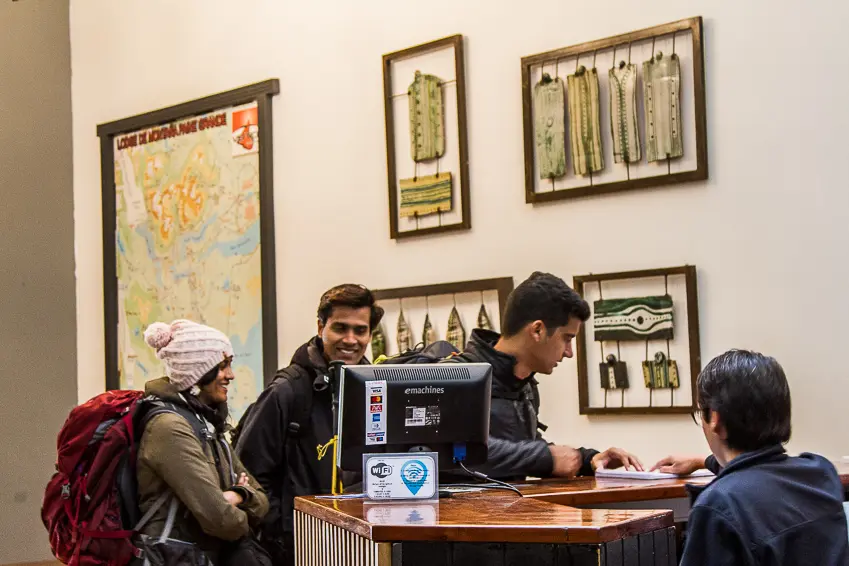
    3. Head to reception to validate your information and receive your booked services—ready to rest or keep exploring!

    “What if I didn’t get a chance to complete it?”
    We strongly recommend completing it at home to save valuable time. However, if you do not complete your Pre-Check-In prior to your trip, you will need to go through the entire process in person upon arriving at your first VERTICE destination.

    Getting ready for your adventure has never been easier! Complete your Pre-Check-In and let us take care of giving you the warmest welcome. See you on the trails!
  • Trek the “Sendero W” with Us: A Journey of Respect and Connection

    Trek the “Sendero W” with Us: A Journey of Respect and Connection

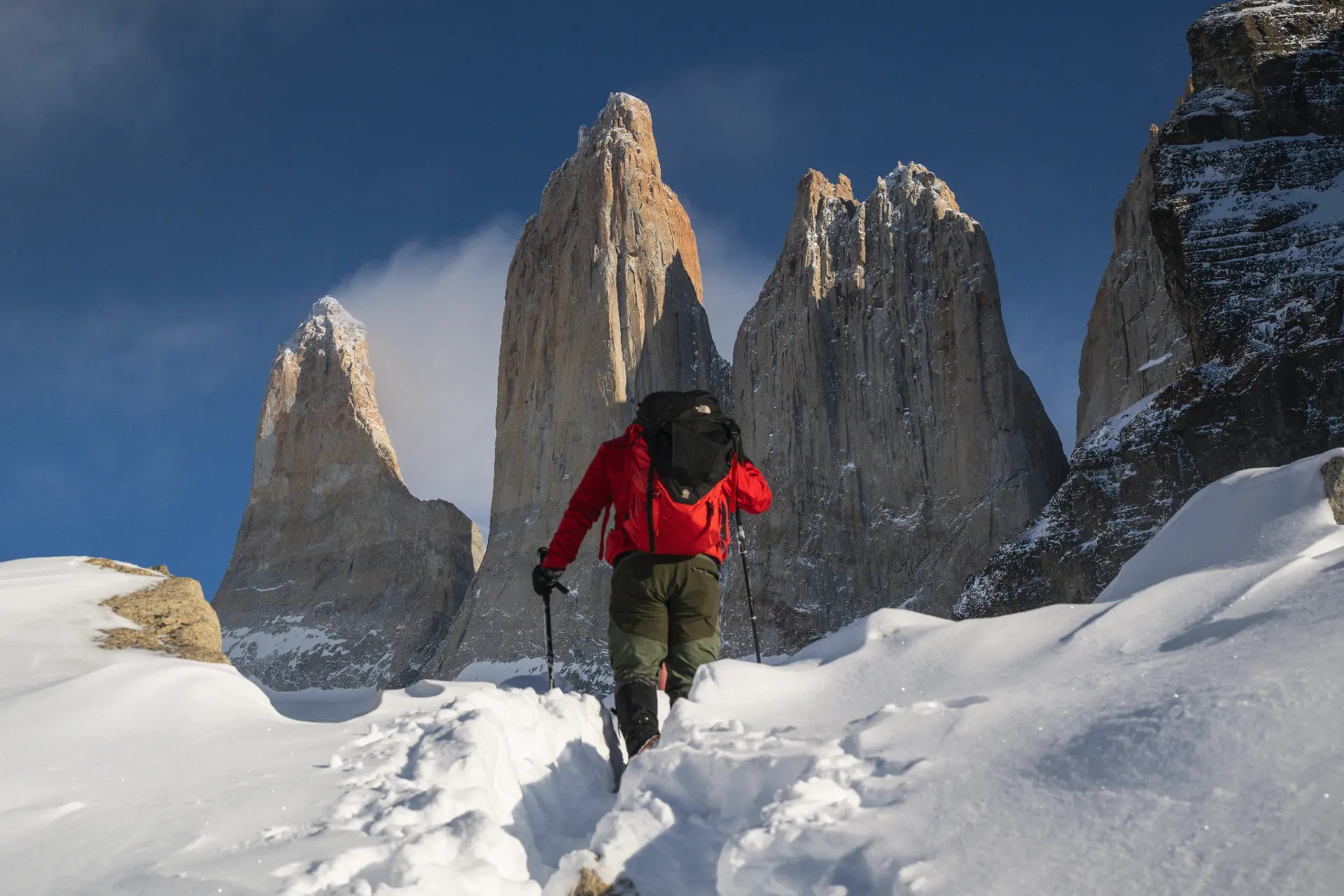
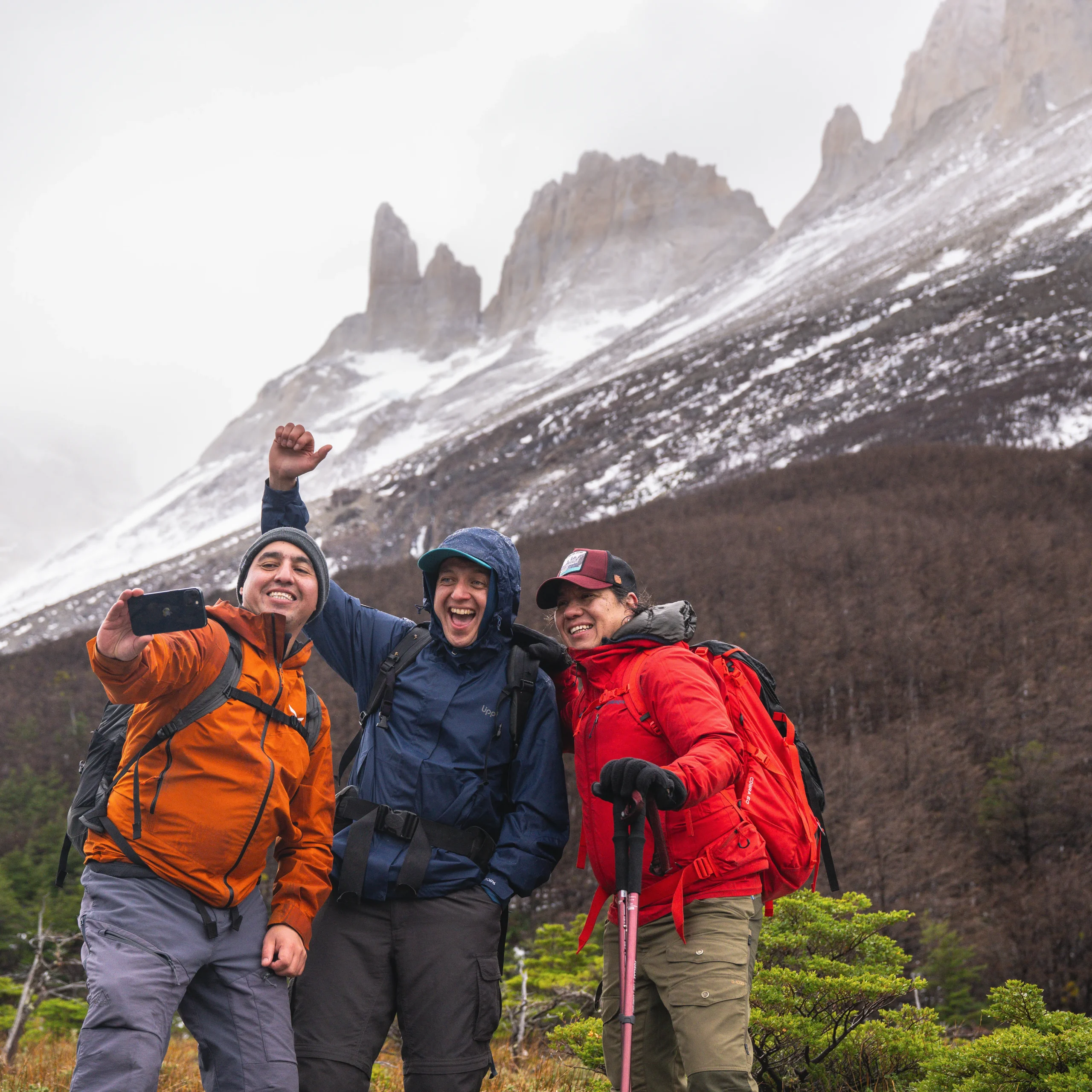
    At Vertice, we believe that trekking through Torres del Paine National Park is much more than a physical challenge; it is a transformative experience. Here is the essential guide to the renowned Sendero W, designed to help you plan your route under our core philosophy: respect and connection with nature.

    Important Notice! Understanding the Physical Demand

    Before diving into the stages of this adventure, it is crucial to understand what you will be facing. The Sendero W is not a casual stroll; it is a multi-day mountain trek.

    • High Physical Demands: You will be walking an average of 15 km daily for several consecutive days, carrying your own gear.
    • Challenging Terrain and Elevation Changes: You will encounter unstable terrain, strong gusts of wind, and steep inclines. For instance, the trail to Base Torres alone involves over 1,000 meters of ascent and descent over rocky ground.
    • Responsible Preparation: This route requires prior physical preparation, proper gear, and a health status compatible with intense physical activity. Every person must know their limits before embarking on this journey.

    The Map of Your Adventure: The 3 Key Sections

    Get ready for the steep climbs and wonders that every corner of this iconic route has to offer:

    1. Ascent to the Base Torres Viewpoint

    The demanding beginning toward the iconic towers. Along the route, you will face a steep and rocky final stretch known as “La Morrena.”

    • Must-See: The Base Torres Viewpoint and its stunning glacial lagoon.
    • Distance: 21 km
    • Time: 8 to 10 hours
    • Difficulty: Demanding / High

    2. The Heart of the Massif: French Valley

    A natural amphitheater surrounded by roaring glaciers and lenga forests. Before reaching it, you will hike along the shores of the breathtaking Lake Nordenskjöld.

    • Must-See: French Valley/Glacier and the Británico Viewpoint.
    • Distance: 21 km
    • Time: 7 to 8 hours
    • Difficulty: Demanding / High

    After this intense hike, your well-deserved rest awaits at our Paine Grande Sector.

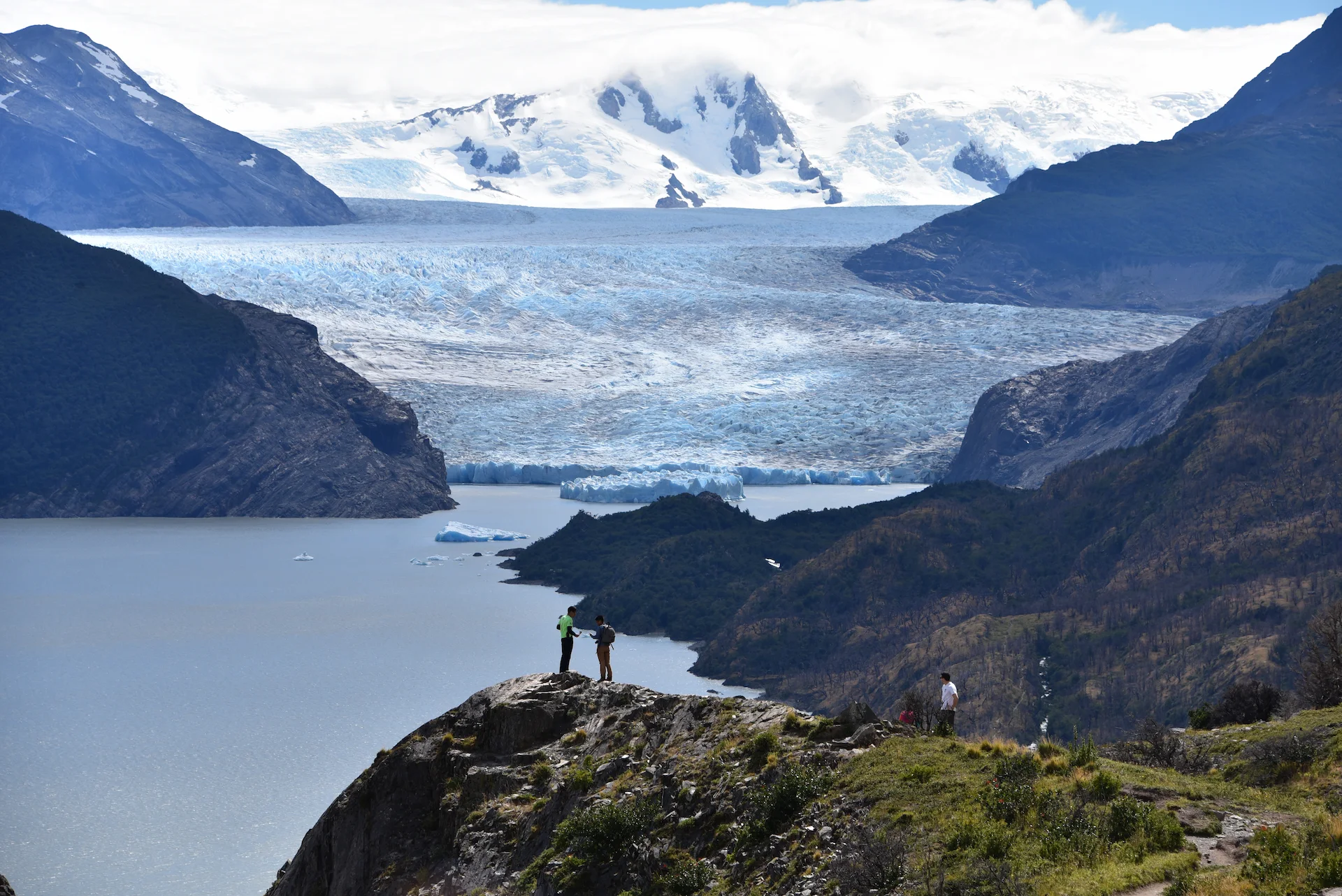
    3. The Grand Finale: Heading to Grey Glacier

    A face-to-face encounter with the awe-inspiring Southern Patagonian Ice Field.

    • Must-See: The blue icebergs of Lake Grey and the Grey Glacier.
    • Distance: 11 km (one way)
    • Time: 4 to 4.5 hours
    • Difficulty: Medium

    Arriving at our Grey Sector after braving the unmistakable Patagonian wind is, without a doubt, a priceless reward.

    Responsible Tourism: Let’s Protect Our Environment

    Hiking these trails is a privilege that demands responsibility. We invite you to practice responsible tourism:

    • Respect the Trail: Always stay on the designated paths to prevent erosion and protect the fragile local flora. This also helps prevent accidents.
    • Keep Your Distance from Wildlife: We are just visitors. Observe guanacos, foxes, and other wildlife from afar. Never feed or approach them.
    • Leave No Trace: The golden rule. Everything you bring with you (especially trash) must return with you.

    The Sendero W is transformative. Come physically prepared, but above all, come with an open heart to experience a real connection.

    Ready for the adventure? Book your stay with us now at the Paine Grande and Grey sectors.

  • Responsible Tourism Guide: The art of visiting without leaving a trace

    Responsible Tourism Guide: The art of visiting without leaving a trace

    Coming to Torres del Paine is a dream come true. But dreams, in order to stay alive, need care. At Vertice, we believe that a true connection with nature is only possible when there is absolute respect for its rules.

    We are not the owners of this landscape; we are visitors. That is why we have designed this blog as a roadmap so that your journey through our trails and shelters serves as an example of environmental commitment and risk prevention.

    1. Fire: A silent enemy
    Making a fire is strictly prohibited in any area of the park. A single spark can destroy decades of ecosystem in minutes.

    • Where to cook? You can only use camping stoves in the specifically designated areas within our campsites and shelters.
    • Important, never leave a lit stove unattended and make sure it is on a stable surface.

    2. Zero Waste: The challenge of “what comes in, leaves with you”Every wrapper you bring with you has the potential to pollute for centuries.

    • Take it with you: The basic rule of the responsible hiker is to return with everything they brought. Do not bury trash or leave organic remains (such as fruit peels), as they alter the diet of the local fauna and the decomposition process is slow due to the cold.
    • Vertice Clean Points: In our sectors, we have clean points. Use them consciously, separating your waste according to the instructions. You can ask our staff about their locations.

    3. The Trail is the only path
    Going off the marked path seems harmless, but the cumulative effect of thousands of people doing the same is devastating.

    • Avoid erosion: By walking off the trail, you compact the soil, destroy micro-flora, and create “scars” that rainwater turns into trenches.
    • Personal safety: Staying on the marked route is your best life insurance. The trails are designed to avoid risk zones.

    4. Wildlife: Observe without invading
    Seeing a puma, a huemul, or a fox is a privilege that makes your heart race. But remember: you are not in a zoo, you are in their home.

    • Safe distance: Use your camera’s zoom, not your feet. Getting too close stresses the animals and can alter their hunting or breeding patterns.
    • Absolute silence: Unnecessary noise scares away the species. The connection with the mountain is best enjoyed in silence.
    • Do not feed them: Giving food to a wild animal is sentencing it to death. They lose their ability to forage for food on their own and become vulnerable.

    A responsible tourist is one who knows their limits. Prevention is the best rescue tool. By taking care of the environment, you ensure that future generations can also feel the awe you feel today in front of the Grey Glacier or the Paine Massif.
    Your behavior is key for us to continue living experiences of respect and connection.

  • A Different Perspective: A Guide to Visiting Torres del Paine in the I

    A Different Perspective: A Guide to Visiting Torres del Paine in the I

    When autumn fades and the first snowfalls blanket the Torres del Paine massifs, the park transforms. What is movement and energy in summer becomes a sanctuary of absolute peace in winter. The wind softens, the silence feels almost tangible, wildlife sightings become more frequent, and the connection with the landscape reaches a depth that few ever experience.

    At Vertice, we believe winter isn’t a season to stay home — it’s a season to rediscover the mountains through a new lens. Guided by our commitment to Respect and Connection, we invite you to be part of this transformation.

    1. Accommodations

    Contrary to what many assume, the heart of Torres del Paine National Park does not sleep in winter. Our Paine Grande and Grey refugios remain open, serving as warm and welcoming shelters in the vastness of the park.

    • Paine Grande: The central hub where the mountain community gathers along the shores of Lake Pehoé.
    • Grey Refugio: Your front-row view of ancient ice, where the glacier’s deep blue stands out with striking intensity against the snowy landscape.

    These spaces are more than just places to rest; they are connection points, where the warmth of a coffee from our minimarket and meaningful conversation become essential parts of the winter experience.

    2. Winter Programs with Certified Guides — A Park Entry Requirement

    If you’re looking for an experience that challenges your senses, our Winter W programs are exactly what you’re looking for. Hiking Patagonia’s trails at this time of year requires an adventurous spirit and thoughtful planning.

    We offer programs specifically designed for you to fully experience the endless wonders that Vertice and Patagonia have to offer. It’s an opportunity to see Grey Glacier or the Cuernos del Paine without the crowds — in a uniquely intimate connection with nature that only winter and its colors can provide.

    Please note: during winter, self-guided circuits are not permitted. Your safety matters. Learn more in our Winter Safety Checklist here.

    3. Precautions

    Patagonia in winter is breathtaking — but it does not forgive a lack of preparation. Here, “Respect” means humility in the face of nature.

    • Proper gear: You’ll need boots with excellent thermal insulation, microspikes for icy sections, trekking poles, and a reinforced layering system. It’s also essential to bring a basic first-aid kit and any personal medications or specialized items you may require.
    • Physical and mental preparation: Any circuit is physically demanding. Train beforehand. Listen to your body — and remember, the weather always sets the pace.
      Connection with the conditions: As mentioned above, in winter, the mountain makes the rules. Following the instructions of our park rangers and certified guides isn’t a suggestion
      — it’s a matter of safety.

    We know planning a winter trip to Patagonia can raise questions. What if the wind closes a trail? What if snow blocks the route?

    Rest assured: the mountain leads, but we take care of you. At Vertice, we have flexible policies in place for adverse weather conditions. If it’s not safe to continue, our team will help you adjust your itinerary accordingly.

    For us, “connection” also means understanding that sometimes the best path forward is to wait. The safety of our travelers is our absolute priority.

    So now that you know all this… Shall we meet this winter?

  • The ultimate equipment guide for Torres del Paine

    The ultimate equipment guide for Torres del Paine

    Visiting Patagonia means facing nature at its most extreme. The region is famous for its volatility: it is possible to experience all four seasons in a single day. You may start the day with sunshine, move through strong winds, cloud cover, and even hail within a matter of hours.

    At Vertice, we believe that an informed traveler is a safe traveler. The key to enjoying and navigating these circuits responsibly lies in a simple but vital strategy: dressing in layers. This system allows you to achieve maximum protection and comfort with the minimum possible weight.

    1. Materials and Layers

    Your clothing is your first line of defense. It is crucial to avoid cotton, as it does not dry quickly and does not retain body heat during physical activity.

    • Protection against the elements: It is essential to wear wind-resistant, quick-drying clothing. You must have a waterproof jacket and pants.
    • Insulation: A fleece jacket (or similar) is indispensable for retaining warmth.
    • Head and extremities: Do not forget a fleece or wool hat (ideally covering the ears), gloves, and a buff or bandana to protect your neck and face.

    2. Footwear

    The most common injuries occur due to inadequate footwear. For the park’s uneven terrain, we require:

    • Trekking boots: They must be waterproof and, very importantly, high-cut to provide support and prevent ankle injuries.
    • Breaking them in: If you buy new boots, wear them for some time before your trip. Never use them for the first time on the first day of the circuit.
    • Socks: Wear technical trekking socks.
    • Tip: Bring blister patches or treatments in your personal first aid kit; they are always very useful.

    3. Essential Technical Gear

    Your backpack (between 35 and 50 liters for personal items) must contain tools that facilitate your movement and safety:

    • Stability: Trekking poles and mini crampons.
    • Visibility: Headlamp with spare batteries.
    • Sun Protection: The Patagonian sun is strong. Wear sunglasses, a cap or visor, lip balm, and sunscreen rated SPF 30+ or higher.

    4. Life at the Refuge and Camping Areas

    Upon arriving at our sectors (Grey, Paine Grande, Dickson, Perros), the goal is rest and recovery.

    • Stay dry: We recommend keeping all your clothing inside dry bags within your backpack. This way, regardless of the day’s rain, you will always have dry clothes for the afternoon.
    • Comfort: Bring a change of clothes exclusively for staying at the refuge, as well as sandals for showers and downtime.
    • Hygiene and Safety: Do not forget your quick-drying travel towel, personal toiletries, and a padlock to secure your belongings in the lockers.

    5. Health and Hydration

    Water from rivers and streams along the trails is drinkable (as long as it is collected far from camping areas), so there is no need to carry extra weight with filters or chlorine. You only need your water bottle (750 ml or 1 liter).

    However, medical self-sufficiency is key: always carry a small first aid kit.

    6. Important Documentation

    To avoid administrative inconveniences at the refuges:

    • Passport and Entry Card: It is vital to travel with the original document and the country entry card (PDI). When presented together, foreign passengers avoid paying the additional VAT.
    • Insurance: Always carry a copy of your travel insurance.

    Ready for the challenge? Untamed Patagonia awaits you, but it demands respect. Check your gear one last time before heading out.

    Download the Safe Trekking Checklist here

  • The calm Revolution

    The calm Revolution

    Why “Slow Travel” in Chile is the trend we truly need.

    In a world that moves faster every day, have we stopped to ask ourselves what we truly value in a journey?

    Chile is establishing itself as a leading destination for “Slow Travel” — and this is far more than a passing trend: it’s a philosophy. It’s about choosing quality over quantity, immersion over mere movement.

    Destinations such as the Carretera Austral — now recognized as a stunning “Scenic Route” — or Torres del Paine, invite us to travel at a slower pace, with greater awareness.

    The true emotional and professional impact of this approach lies in:

    Authentic Connection: Leaving behind mass tourism to genuinely connect with local communities, their stories, and their culture.

    True Sustainability: Supporting small local ventures, reducing seasonality in tourism, and ensuring that benefits reach less-visited regions — all while promoting the conservation of our natural heritage.

    Enriching Experiences: Prioritizing experience over the photo, allowing ourselves to absorb the beauty of Atacama or the Elqui Valley with a depth that transforms us.

    Traveling slowly is an act of respect — toward the environment and toward ourselves. It’s the most mindful way to foster tourism that not only showcases a country, but also protects and celebrates it.

    We invite the industry to embrace this vision: a sustainable journey is one with soul — an infinite experience.

  • Puerto Natales, epicenter of the World Tourism Summit 2025

    Puerto Natales, epicenter of the World Tourism Summit 2025

    Historic days in Puerto Natales! The region has become the heart of the Adventure Travel World Summit (ATWS) 2025, bringing together over 800 global tour operators to redefine the future of travel.

    This event confirms that Chile’s Patagonia stands as the world’s benchmark for adventure and nature tourism.

    Beyond the impressive figures — with a projected economic impact of $72 million USD and thousands of new visitors — the true value lies in the deep connection that is created here.

    Through experiences like our “Patagonia Wildlife Photo Tour”, participants felt the very essence of this land: spotting pumas, condors, and untouched flora, creating unforgettable memories that go far beyond the journey itself.

    At Vertice, together with the entire region, we are committed to a model that places hospitality and local development at the forefront. Every hike through Torres del Paine, every fjord navigation, and every collaboration with artisans and local guides strengthens an ecosystem that benefits our whole community.

    People were on fire with the passion and majesty we shared! Let’s keep working together so that the Eighth Wonder of the World continues to be both a driver of growth and a model of conservation. Here’s to more infinite experiences waiting to be lived.

  • Winter Season 2026: Is it possible to visit Torres del Paine in winter

    Winter Season 2026: Is it possible to visit Torres del Paine in winter

    When most people think of Torres del Paine, they picture the summer months between November and March, when the trails are filled with travelers from around the world. But the truth is that winter (May to September) is a magical season to discover the park from a completely different perspective.

    The big question is: can you visit Torres del Paine in winter?

    The answer is yes, and it’s a unique experience you deserve to live. Here’s why it’s worth it and what you should know before embarking on your adventure.

    Benefits of visiting Torres del Paine in winter

    1. Transformed landscapes

    The cold and snow paint the massif, glaciers, and forests in winter tones rarely seen. While it doesn’t snow every day during winter, the chances are much higher compared to other seasons. And here’s a bonus: this is the period with the least strong winds.

    1. Fewer visitors, deeper connection

    In winter, trails and viewpoints see significantly fewer visitors. This means more silence, greater intimacy with nature, and the chance to feel—at times—like the park belongs only to you.

    1. More visible wildlife

    With fewer travelers, many animals move more freely. Winter is ideal for potting pumas, foxes, guanacos, and condors. When it snows, you can observe them even better thanks to the contrasting backdrop.

    Tips for winter travel

    1. Prepare for the weather

    Temperatures are often below freezing, especially at night. It’s essential to bring layered clothing, gloves, a warm hat, and waterproof boots with good traction for snow or ice. Trekking poles are always a great companion.

    1. Plan your stay carefully

    In winter, some trails and refuges are closed for safety reasons. It’s best to check in advance which circuits are open and book ahead. In our case, we’ll have our Paine Grande and Grey refuges operational.

    1. Your experiences must be guided

    To visit the park during this season, guided tours with certified guides who know the climate and terrain changes are required. Safety always comes first.

    1. Consider daylight hours

    Winter days are shorter, so it’s advisable to make the most of daylight from early morning and plan routes that fit within those hours.

    Winter travel: an experience you deserve to live

    Visiting Torres del Paine in winter isn’t for everyone, but those who do experience a different and more authentic side of the park. It’s a journey that combines adventure, contemplation, and deep connection with nature.

    At Vértice, we’re excited to confirm our Winter Season 2026! We have the experience and knowledge to guide you through this special season, ensuring you safely enjoy everything Paine has to offer—even in its coldest version.

    Ready to embrace the Patagonian winter? Book in advance at www.vertice.travel or by emailing ventas@vertice.travel

  • From the North to Antarctica: The 4 biomes you can explore with Vértic

    From the North to Antarctica: The 4 biomes you can explore with Vértic

    Chile is a unique country. Long, narrow, and incredibly diverse. Across its more than 2,500 miles of extension unfold landscapes so distinct that it’s sometimes hard to believe they’re all part of the same territory. From the world’s driest desert to the eternal ice of Antarctica, passing through mountains, fjords, and islands rich in culture.

    1. Desert and Altiplano: San Pedro de Atacama and surroundings

    In the far north, the sun paints the dunes golden and the salt-crusted earth crunches beneath your feet. Here, landscapes seem otherworldly: geysers, salt flats, high-altitude lagoons, and night skies that take your breath away.

    Must-sees with Vértice Travel: Valle de la Luna (Moon Valley), El Tatio Geysers, Piedras Rojas, altiplanic lagoons, stargazing experiences, and even Uyuni Salt Flats.

    1. Patagonia and Fjords: From Aysén to Magallanes

    Nature at its wildest. Glaciers, mountains, rivers, and a sense of freedom that’s hard to describe. Patagonia is a journey you’ll never forget. It’s an infinite experience.

    Must-sees with Vértice Travel: Puerto Varas, Torres del Paine National Park, fjord navigation, glacier trekking, mountain refuge life.

    1. Polar and Subantarctic Biome: The majestic Antarctica

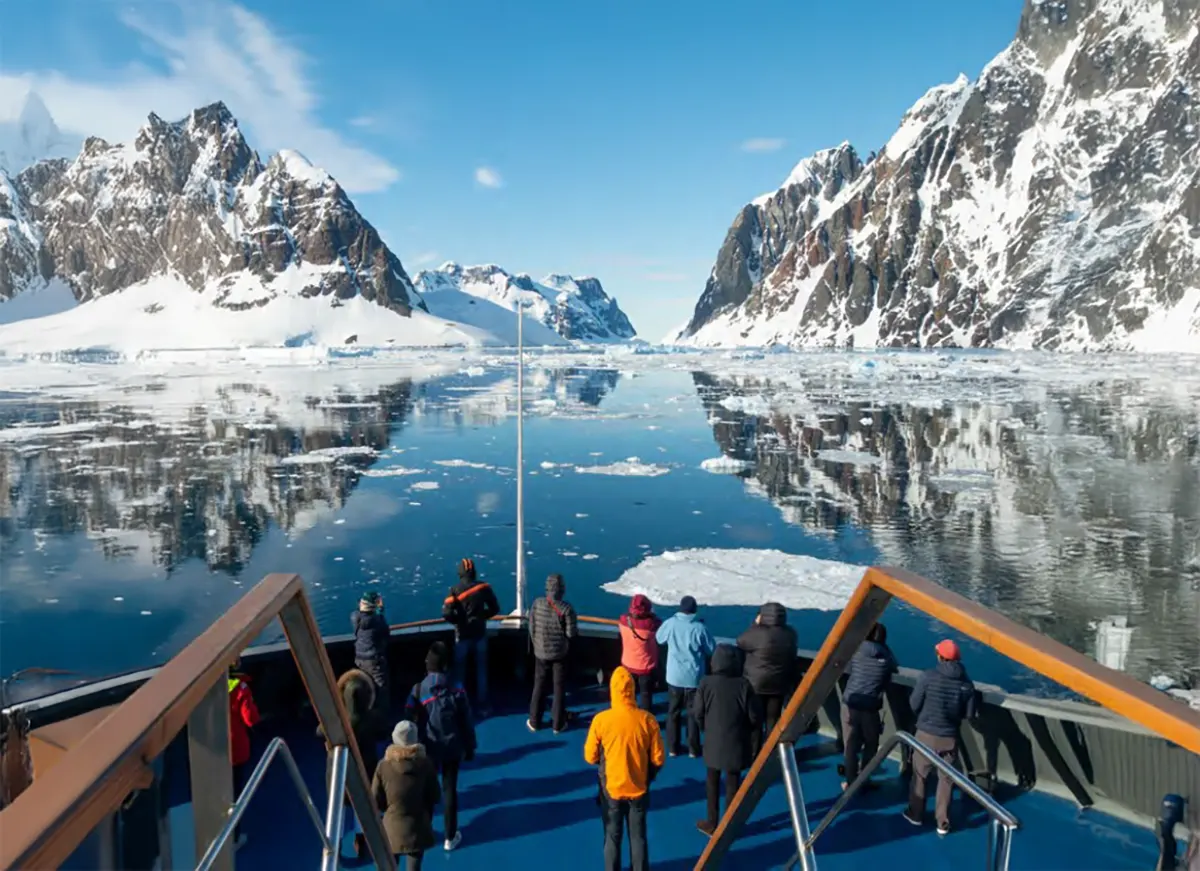
    The end of the world is real… and you can explore it with Vértice. Here, the vastness of ice, penguins, and explorer history come together in an experience that goes beyond tourism. Must-sees with Vértice Travel: Antarctic expeditions, visits to Puerto Williams, journeys through subantarctic channels.

    1. Island and Polynesian Culture: Rapa Nui (Easter Island)

    A remote island in the middle of the Pacific, with a unique energy. Here the biome shifts and ancestral culture flourishes. Its dormant volcanoes, silent moai, and volcanic landscapes offer a completely different experience. Must-sees with Vértice Travel: sunrise at Ahu Tongariki, trekking to Rano Kau crater, Anakena beaches, immersion in Rapa Nui history and worldview.

    Which biome will give you an infinite experience?

    Each of these territories represents a different experience, and at Vértice we help you live them with respect, excitement, and genuine connection to nature and local cultures.

    Discover all our programs and choose your next adventure on our website.

  • San Pedro de Atacama: Discover the Corners of the World’s Driest Deser

    San Pedro de Atacama: Discover the Corners of the World’s Driest Deser

    At almost 2,500 meters above sea level lies this magical town, which holds value not only for its ancient history and unique architecture, but also as a gateway to explore unimaginable landscapes. Vertice Travel provides all the guidance needed to experience an unforgettable journey.

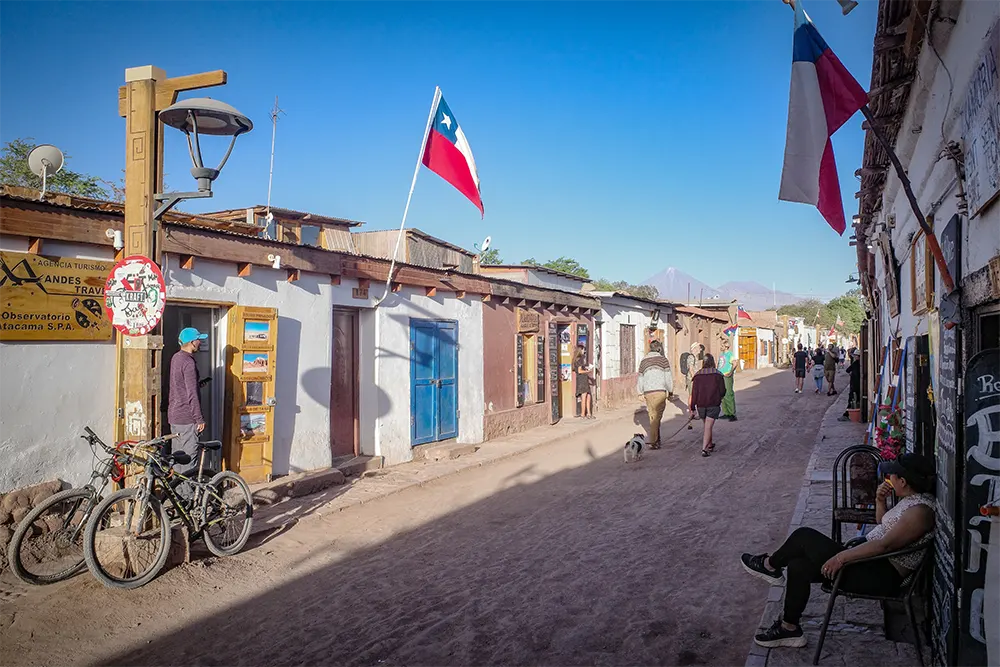
    The iconic white church, the Museo Arqueológico del Padre Gustavo Le Paige with mummies and pre-Hispanic artifacts, the Plaza de Armas, and the dirt streets lined with adobe houses make San Pedro de Atacama a welcoming town. It has everything needed for a pleasant stay, the perfect base for exploring its surroundings and learning its history.

    Planning is essential when traveling to San Pedro de Atacama. There are countless places to visit, long distances to cover, and various schedules for each destination; this is why Vertice Travel’s guidance is so valuable for making the most of the available time.

    Valle de la Luna is a must-see in the Cordillera de la Sal, but it includes a pre-tour. It begins in the afternoon, revealing desert corners like the Duna Mayor, the Anfiteatro, the Tres Marías, and the Mirador Piedra del Coyote, where the arid landscape, with its different shades of brown, stretches to the horizon. Finally, you can enjoy the sunset with a view of the Cordillera de los Andes at 2,600 meters above sea level.

    For an unrepeatable experience, the one at Laguna Cejar is truly special. Within the area is Laguna Piedra, where the high salinity of its crystal-clear waters makes floating effortless. The surroundings combine the white of the scaly salt on the ground, the turquoise of the water, and the pink of the flamingos that pose for the cameras of amazed tourists.

    Waking up early in San Pedro de Atacama definitely has its rewards. The tour to the Géiser del Tatio involves about an hour and a half drive, and you must arrive before night ends to witness the unique life event of seeing steam fumaroles at sunrise. As the light begins to brighten the vast terrain, you can see the shadows rising from the ground like clouds toward the sky. Then the entire landscape becomes visible: the cracks, boiling water, bushes, cacti, and desert.

    After the awe-inspiring natural spectacle, on the way back to San Pedro de Atacama, you can make several stops: a bofedal where water from the Altiplano rains collects, providing a feeding ground for flamingos, guanacos, foxes, and other native animals; the humedal de Putana, where one of the area’s most active volcanoes can be admired; and the small town of Machuca, where you can purchase typical local products.

    If you still have the endurance for the altitude, the trip to the lagunas altiplánicas is a spectacular journey that includes visits to the towns of Socaire and Toconao, where the Valle de Jere proves that an oasis can exist in the desert, and fruits and vegetables can be grown. Beyond 4,000 meters in elevation, you’ll reach the Lagunas Miscanti y Miñiques, offering a privileged view of the area’s volcanoes, like the active Láscar, which usually has a visible fumarole.

    The climate in San Pedro de Atacama is typically warm, but temperatures drop at night, especially in higher altitude areas, where strong winds are also common. During the summer, the Bolivian winter can bring heavy rainfall to the city and its surroundings. The Vertice Travel team is committed to providing comprehensive advisory services to help organize a seamless trip.